About material
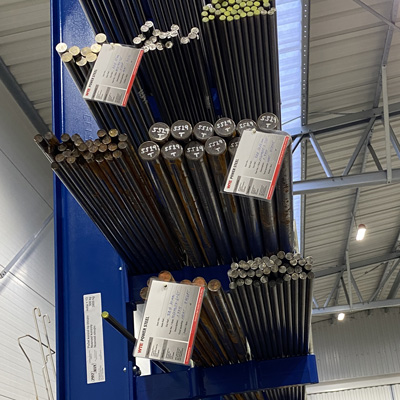
✓ Available from European Stock
Looking for 40NiCrMo7, 1.6562, SAE 4340 or ASTM A320 Grade L43 alloy steel round bars?
WTE PowerSteel is a European supplier and stockholder of high-strength nickel-chromium-molybdenum alloy steel for demanding mechanical, pressure-equipment and low-temperature bolting applications.
We supply certified round bars and cut-to-length pieces in grades commonly designated as 40NiCrMo7, SAE 4340 and ASTM A320 Grade L43, with full material traceability, EN 10204 3.1 certification and fast delivery throughout Europe and worldwide.
This high-strength Ni-Cr-Mo alloy steel combines excellent hardenability, high tensile and yield strength, good toughness and strong resistance to impact and fatigue loading.
When supplied according to ASTM A320 Grade L43, the material is specifically heat treated and tested for use as bolting material for pressure vessels, valves, flanges, fittings and similar equipment operating at low temperatures.
For general engineering and component manufacturing, SAE 4340 and comparable 40NiCrMo7 material are widely used for highly stressed shafts, gears, pins, fasteners, couplings, connecting components and heavy-duty machined parts.
We supply full-length bars as well as accurately cut pieces according to customer requirements.
40NiCrMo7 and SAE 4340 belong to the group of high-strength nickel-chromium-molybdenum alloy steels developed for components subjected to severe mechanical loading.
The combination of nickel, chromium and molybdenum provides excellent through-hardening capability, high strength after quenching and tempering and good toughness even in relatively large cross-sections.
40NiCrMo7, SAE 4340 and ASTM A320 L43 are used for components requiring high mechanical strength, toughness and reliable performance under severe loading.
Typical applications include:
Our customers use 40NiCrMo7 / SAE 4340 / ASTM A320 L43 in:
We supply:
Available diameters, lengths, tolerances and heat-treatment conditions upon request.
The material may be supplied according to the following standards and designations, depending on the required application:
ASTM A320 Grade L43 covers alloy-steel bolting material for pressure vessels, valves, flanges, fittings and similar pressure equipment intended for low-temperature service.
The term bolting material may include hot-wrought bars, bolts, screws, studs and stud bolts. Material supplied as ASTM A320 L43 must meet the applicable chemical composition, heat-treatment, mechanical testing, hardness, impact testing, identification and certification requirements.
ASTM A29 / A29M specifies general requirements for hot-wrought carbon and alloy steel bars. It should be used together with the applicable steel-grade, chemical-composition, heat-treatment and mechanical-property requirements.
The required standard, grade, heat-treatment condition and mechanical properties must always be clearly stated in the enquiry and purchase order.
SAE 4340 and comparable 40NiCrMo7 grades are high-strength nickel-chromium-molybdenum alloy steels.
The nominal alloying concept includes:
Nickel improves toughness and hardenability, chromium contributes to strength and wear resistance and molybdenum improves hardenability, tempering resistance and mechanical stability.
The exact chemical composition depends on the applicable standard and must be confirmed by the individual material inspection certificate.
The mechanical properties of 40NiCrMo7 and SAE 4340 depend strongly on the product dimensions, heat-treatment condition, tempering temperature and required strength class.
The material can be supplied in conditions including:
Quenched and tempered material can achieve a high combination of tensile strength, yield strength, hardness, toughness and fatigue resistance.
For ASTM A320 Grade L43, the required tensile properties, hardness and impact-test values must comply with the applicable edition of ASTM A320 and the ordered material class.
All mechanical values must be verified against the applicable specification, product dimensions, heat-treatment condition and individual EN 10204 3.1 inspection certificate.
ASTM A320 Grade L43 is a high-strength alloy-steel bolting grade intended for low-temperature service.
It is commonly selected where higher strength is required than that provided by conventional ASTM A320 Grade L7 material.
Typical products manufactured from ASTM A320 L43 include:
ASTM A320 L43 material must be correctly heat treated and tested to demonstrate compliance with the required mechanical properties and low-temperature impact requirements.
The required test temperature, impact energy, dimensions, threading condition, supplementary requirements and certification must be specified at the enquiry stage.
Heat treatment is essential for obtaining the required properties of 40NiCrMo7, SAE 4340 and ASTM A320 L43.
Depending on the required final properties, processing may include:
The tempering temperature must be selected according to the required strength, hardness, toughness and final application.
Incorrect or uncontrolled heat treatment may result in excessive hardness, insufficient toughness, distortion or reduced fatigue performance.
40NiCrMo7 and SAE 4340 can be machined using conventional machining methods.
For best machinability, the material is normally machined in an annealed, softened or lower-strength heat-treated condition before final quenching and tempering.
Common machining operations include:
Rigid tooling, suitable carbide grades, controlled cutting speeds and appropriate cooling are recommended for material supplied in a high-strength quenched and tempered condition.
40NiCrMo7 and SAE 4340 can be welded, but welding requires carefully controlled procedures because of the material’s high hardenability and risk of cracking.
Typical welding precautions include:
Welding should generally be performed before final quenching and tempering whenever the component design and manufacturing process permit.
Material can be supplied with:
For ASTM A320 L43, the impact-test temperature, impact-energy requirements and any supplementary testing must be clearly specified at the enquiry or order stage.
This material may also be known as:
40NiCrMo7, SAE 4340 and ASTM A320 L43 are closely associated with high-strength nickel-chromium-molybdenum alloy steels, but the designations do not describe exactly the same type of requirement.
These designations must therefore not be treated as automatically interchangeable without reviewing the chemical composition, product form, heat treatment, mechanical properties, impact requirements and applicable certification.
ASTM A320 L43 is generally selected where higher mechanical strength is required than that normally specified for ASTM A320 Grade L7.
Both grades are intended for low-temperature bolting applications, but they differ in alloy concept, heat treatment and required mechanical properties.
The correct grade must be selected according to:
WTE PowerSteel specializes in supplying high-strength alloy steels, low-temperature bolting steels and special materials for demanding industrial applications.
Our advantages include:
Whether you require a single cut piece, a complete round bar or material for serial production, our team will help you select the correct grade, dimensions, heat-treatment condition and inspection requirements.
40NiCrMo7 is a high-strength nickel-chromium-molybdenum alloy steel designed for components requiring excellent hardenability, tensile strength, toughness and resistance to fatigue and impact loading.
It is commonly used for shafts, gears, pins, bolts, couplings and other highly stressed machine components.
SAE 4340 is a high-strength Ni-Cr-Mo alloy steel containing approximately 0.40% carbon, 1.8% nickel, 0.8% chromium and 0.25% molybdenum.
It is widely used for heavily loaded components requiring high strength, toughness and good through-hardening properties.
ASTM A320 Grade L43 is a high-strength alloy-steel bolting grade for pressure vessels, valves, flanges, fittings and similar equipment intended for low-temperature service.
The material must meet specified requirements for chemical composition, heat treatment, tensile properties, hardness and low-temperature impact toughness.
ASTM A320 L43 is commonly manufactured from a SAE 4340-type nickel-chromium-molybdenum alloy steel.
However, SAE 4340 identifies the base steel grade, while ASTM A320 L43 defines additional requirements for finished low-temperature bolting material, including heat treatment, mechanical properties, hardness, impact testing and certification.
40NiCrMo7 and SAE 4340 are commonly presented as comparable nickel-chromium-molybdenum alloy steels.
They should not automatically be considered fully interchangeable. The applicable chemical limits, product standards, heat treatment, mechanical properties and certification requirements must be compared before substitution.
ASTM A29 / A29M specifies general requirements for hot-wrought carbon and alloy steel bars.
It covers areas such as manufacturing, chemical analysis, dimensions, tolerances, testing, workmanship, marking and certification. A separate grade or product specification is still required to define the material composition and final mechanical properties.
ASTM A320 L43 is a specific low-temperature bolting grade with defined heat-treatment, mechanical-property and impact-testing requirements.
ASTM A29 is a general specification for hot-wrought carbon and alloy steel bars. ASTM A29 alone does not certify material as ASTM A320 L43.
Yes. ASTM A320 L43 is specifically intended for low-temperature bolting applications.
The required impact-test temperature and impact-energy values depend on the applicable standard, ordered dimensions and customer requirements.
Yes. Quenching and tempering is the principal heat-treatment route used to obtain the required combination of high strength, hardness and toughness.
The exact treatment depends on the bar diameter, component dimensions and required mechanical properties.
Yes. SAE 4340 can be machined using conventional turning, milling, drilling, boring, threading and grinding processes.
Machinability is best in the annealed or softened condition and decreases as the final hardness and tensile strength increase.
SAE 4340 can be welded, but its high hardenability requires controlled preheating, low-hydrogen consumables, controlled cooling and, where necessary, post-weld heat treatment.
A qualified welding procedure should always be used.
WTE PowerSteel supplies selected dimensions of 40NiCrMo7, SAE 4340 and ASTM A320 Grade L43 round bars and cut-to-length pieces from European and international sources.
Please contact us for current stock availability, diameters, lengths, heat-treatment conditions and certification details.
Yes. We supply complete bars as well as accurately cut pieces according to customer requirements.
Additional machining, heat treatment, testing and inspection can be arranged upon request.
Yes. Material can be supplied with an EN 10204 3.1 inspection certificate showing the heat number, chemical composition, heat treatment, mechanical properties and applicable test results.
Yes. Charpy V-notch impact testing can be arranged at the required test temperature according to ASTM A320 or customer-specific requirements.
The required test temperature, specimen orientation, minimum impact energy and reporting requirements must be stated in the enquiry.
Yes. Ultrasonic testing can be arranged according to the applicable ASTM, EN or customer-specific testing and acceptance standard.
The required testing method, acceptance level and reporting requirements should be specified at the enquiry stage.
For an accurate quotation, please specify:
© 2026 WTE PowerSteel
vyrobila 

